Best Property Management Computer Software for Property Management Teams (2026)

For property management operations teams, the fastest path is to automate repetitive checks first, route edge cases to the right owner, and keep final decisions with humans.
Quick answer
property management computer software can reduce repetitive admin load when implemented as a controlled workflow with clear approvals and exception ownership.
For property management operations teams, the fastest path is to automate repetitive checks first, route edge cases to the right owner, and keep final decisions with humans.
- Intent: BOFU
- SERP angle: buyer guide
- Goal: improve throughput, reduce errors, and speed up reporting
Why property management computer software matters now
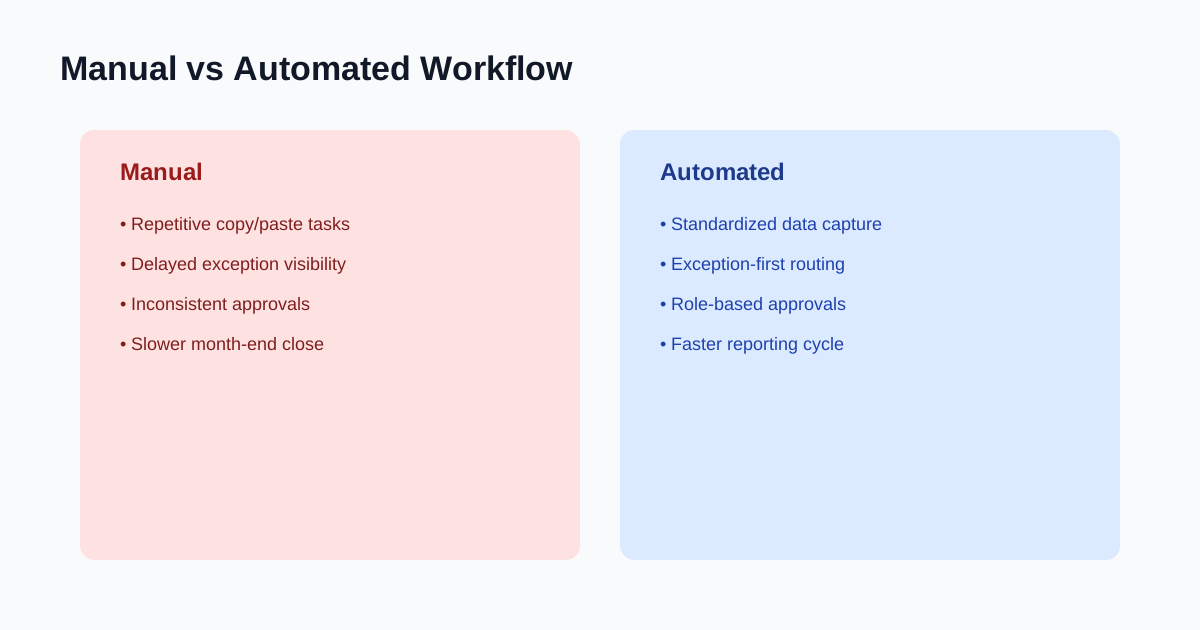
Search demand for "property management computer software" indicates active buyer and implementation interest, especially among teams looking for operational leverage without increasing headcount.
Most organizations already have the tools; the real gap is execution consistency across intake, validation, routing, and approvals.
- Pain pattern: manual handoffs and exception backlog
- Business risk: delayed close cycles and avoidable rework
- Opportunity: policy-driven automation with visible controls
What to evaluate before rollout
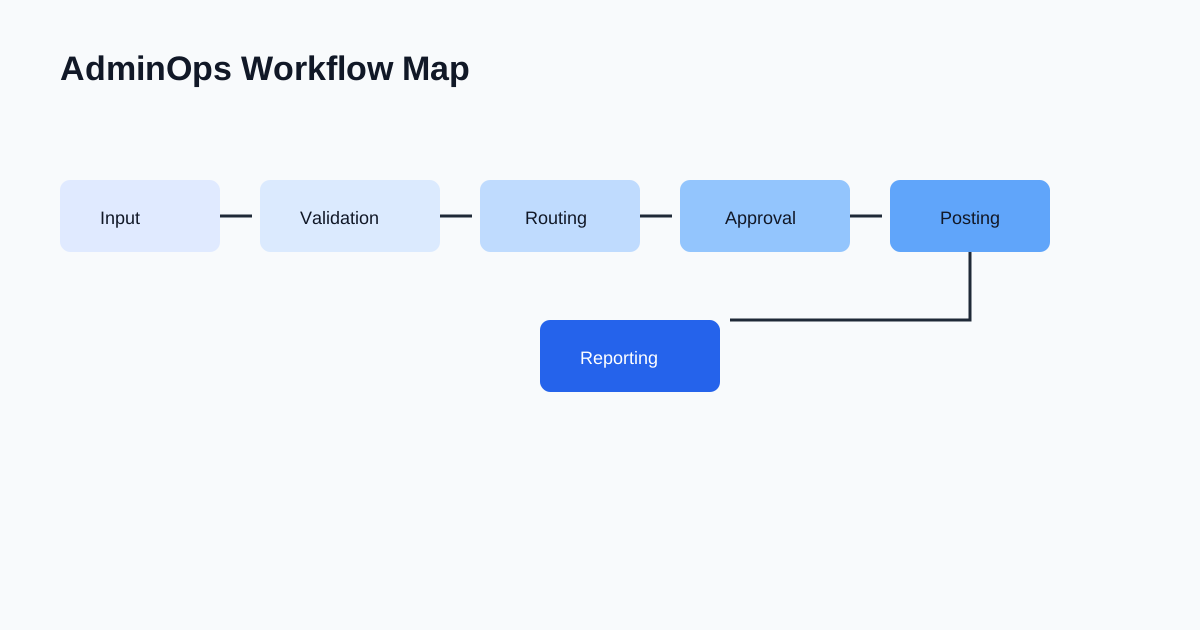
Define the workflow boundary first: where requests enter, where exceptions go, and who approves final outcomes.
Strong implementations prioritize measurable outcomes over tool complexity in the first 30 days.
- Workflow volume and repeatability
- Exception categories and escalation owners
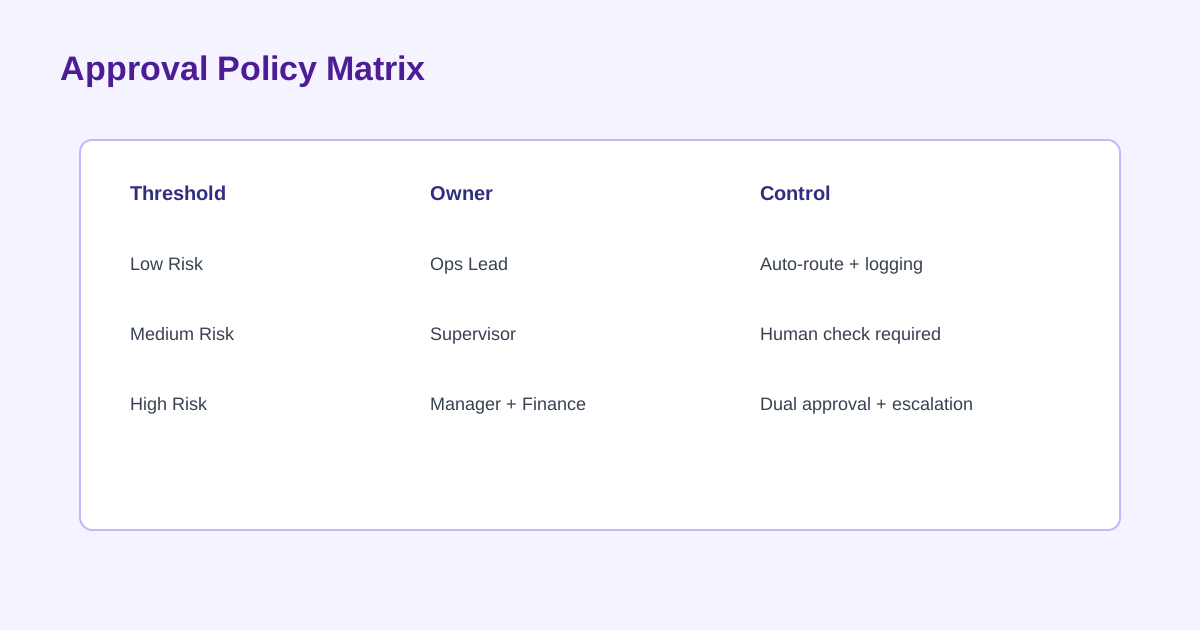
- Approval thresholds and segregation of duties
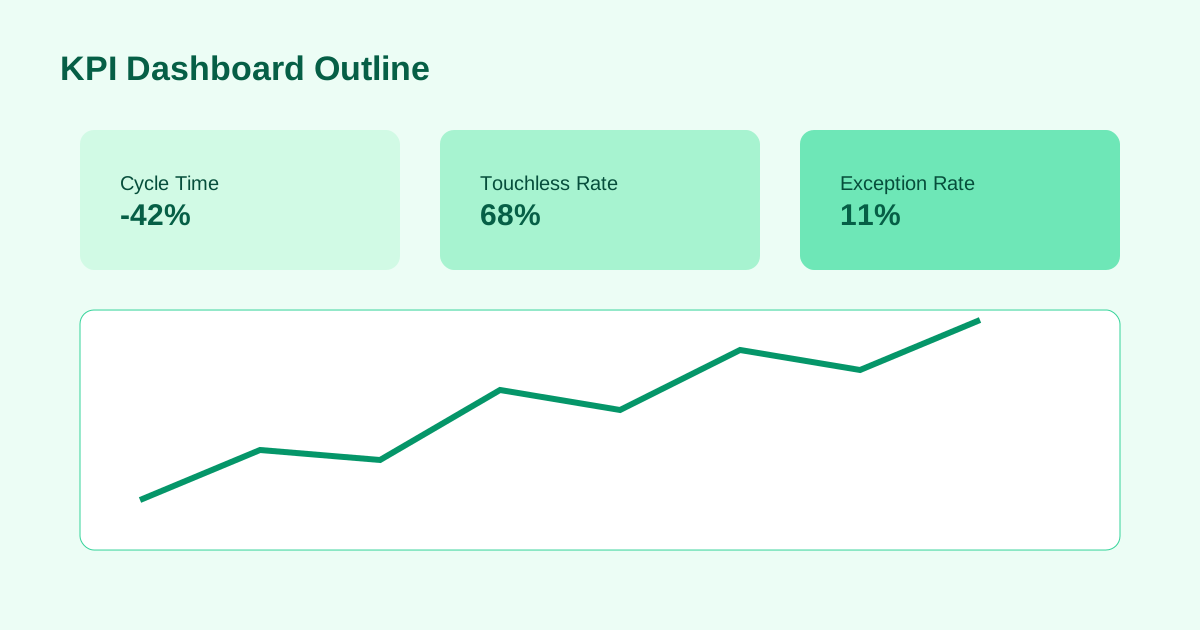
- KPI baseline: cycle time, touchless rate, exception rate
How to implement property management computer software in 30 days
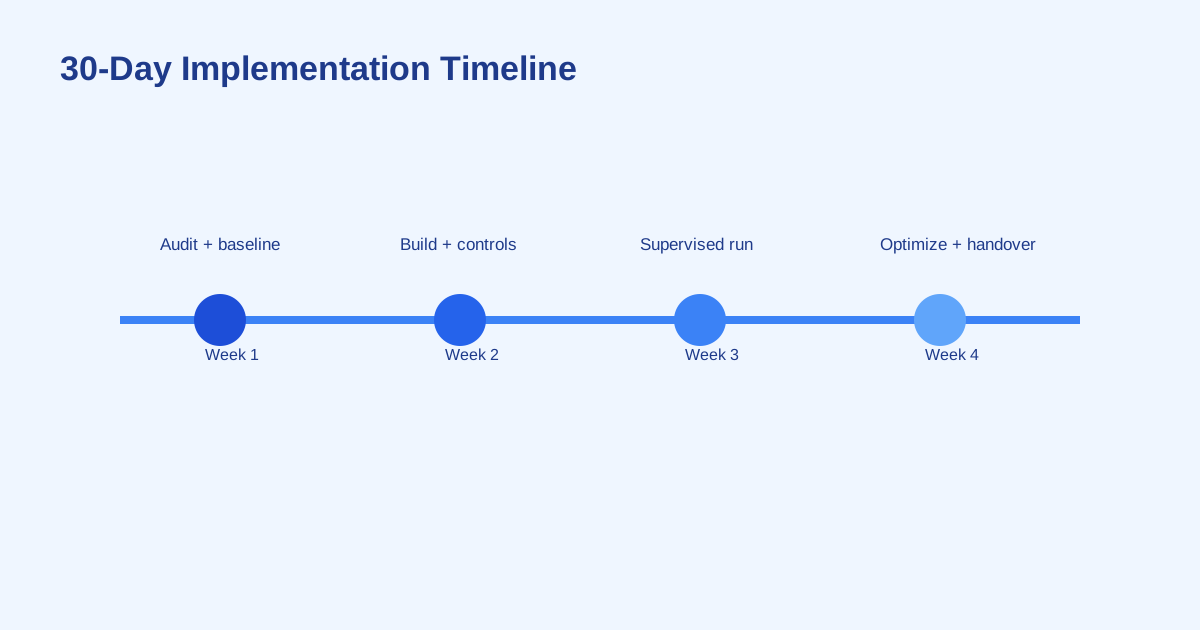
Start with one high-friction process and run supervised automation in short weekly loops.
Expand scope only after exception rates stabilize and the team trusts control policies.
- Step 1: map current-state workflow and owners
- Step 2: define required fields and validation checks
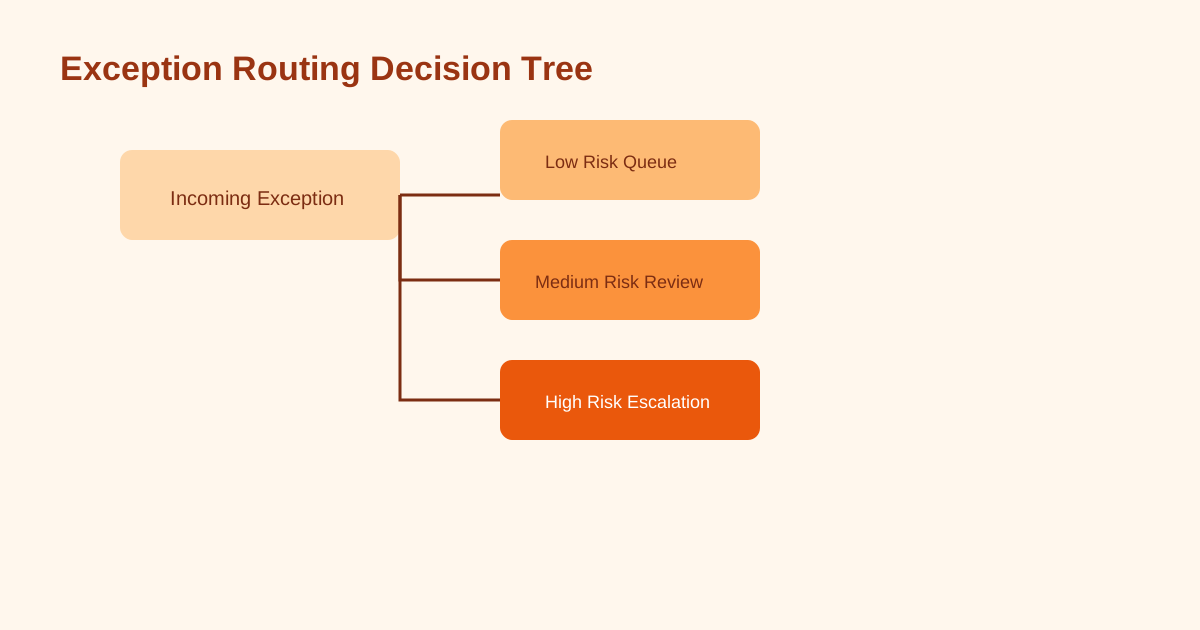
- Step 3: classify exceptions by severity and assign SLAs
- Step 4: launch policy-based routing with human approvals
- Step 5: review KPI trends weekly and tune rules
Common mistakes to avoid
The biggest failure mode is automating unstable processes before ownership and SOPs are clear.
A close second is over-automating exception decisions that still require human context.
- Skipping baseline KPI measurement
- No clear owner for exception queues
- Approval policies that are vague or inconsistent
- Too many workflows launched at once
KPI scorecard for leadership
Use a small KPI set and review weekly to maintain execution focus.
If these metrics improve consistently, scale the pattern to adjacent workflows.
- Cycle time (request to completion)
- Touchless rate (% processed without manual edits)
- Exception rate and exception aging
- Rework rate after approval
- On-time reporting delivery
Internal links to continue your research
Use these pages to compare delivery models, evaluate rollout scope, and book a pilot.
This cluster linking supports both human navigation and stronger topical authority.
- Pilot offer: /adminops-pilot
- Property operations service page: /property-management-ai-agents
- Property automation guide: /guides/property-management-automation-guide
- Comparison page: /comparisons/adminops-vs-hiring-admin-staff
- Insights index: /insights
FAQ
What is property management computer software? property management computer software is a practical operations workflow where automation handles repeatable steps and humans retain approval over high-risk decisions.
How quickly can we see results? Most teams see measurable movement in 2–4 weeks when scope is narrow and KPIs are reviewed weekly.
Does this replace managers? No. It removes repetitive manual work and keeps manager approvals in policy-defined checkpoints.
What should we automate first? Start with high-volume, rules-based tasks that currently create queue delays and rework.
CTA
Want a tailored rollout map for this workflow?
Book a strategy call and get a 30-day pilot plan with KPI targets and control policies.
- Top CTA: Book a free strategy call
- Mid CTA: Request a workflow blueprint
- End CTA: Launch a 30-day pilot